By Prasad Siriwardena, Environmental Advocate and Photographer
April 28, 2025
Introduction
In the heart of Colombo, surrounded by gleaming skyscrapers and the constant hum of urban activity, lies a historic body of water that tells the story of Sri Lanka’s capital through the centuries. Beira Lake, once the lifeblood of colonial Colombo and a centrepiece of the city’s commercial and social landscape, now stands as both a testament to our past and a stark reminder of the environmental challenges we face today.
At Greenworld Trust, we believe that urban water bodies like Beira Lake represent critical ecological assets that can contribute significantly to sustainable urban development while preserving cultural heritage. This blog explores this remarkable urban waterway’s rich history, current environmental status, and potential future.
A Journey Through Time: The Historical Significance of Beira Lake
Pre-Colonial Origins
Before European colonisation, historical records suggest the area contained natural marshlands and small water bodies utilised by local communities. These wetlands played a crucial role in the region’s natural drainage system and supported diverse flora and fauna.
Portuguese Period (1505-1656)
The transformation of this natural landscape began with the arrival of the Portuguese. In 1521, under the direction of military engineer João da Beira (from whom the lake derives its name), the existing marshes were expanded and deepened to create a defensive moat surrounding the newly established Colombo Fort. This strategic waterway was the first line of defence against potential invasions from inland territories.
Dutch Era (1656-1796)
When the Dutch East India Company gained control of Colombo, they recognised the potential of Beira Lake beyond military purposes. They expanded and engineered an intricate canal system connecting the lake to various city and harbour parts. The “Dutch Canal,” remnants of which can still be found today, facilitated the transportation of goods from inland areas to the port, revolutionising commerce in colonial Ceylon.
During this period, the lake’s shores began to host warehouses and trading posts. The Dutch also introduced the concept of recreational boating on the lake, establishing what would later become a cherished tradition in Colombo.
British Colonial Period (1796-1948)
Under British rule, Beira Lake reached the height of its commercial and social importance. The lake and its canal system were further developed to serve the expanding coffee and later tea trade. Large warehouses known as “godowns” lined its shores, storing goods from the central highlands before export.
By the mid-19th century, the lake had also become a social hub for the colonial elite. The Colombo Rowing Club, established in 1864, began hosting regular regattas, attracting spectators across the island. Pleasure gardens and promenades along the lake’s edge became popular recreational spaces, while residential bungalows with lake views were highly coveted.
The 1870s saw the iconic Victorian-era Beira Lake Railway Bridge construction, which still stands today as a heritage structure, silently chronicling the lake’s industrial past.
Ecological Profile: Natural Services and Biodiversity
Despite centuries of modification, Beira Lake continues to provide vital ecological services to Colombo’s urban environment:
Climate Regulation
As an expansive water body spanning approximately 65 hectares, Beira Lake acts as a natural thermoregulator for the surrounding urban areas. Studies conducted by the Urban Development Authority (UDA, 2020) indicate that temperatures in the vicinity of the lake can be up to 3-4°C lower than in areas without similar water bodies, helping mitigate Colombo’s growing urban heat island effect.
Flood Mitigation
The lake serves as a crucial catchment area during monsoon seasons. According to the Meteorological Department’s 2023 assessment, Beira Lake can temporarily store approximately 650,000 cubic meters of stormwater, significantly reducing flood risks in adjacent low-lying neighbourhoods.
Biodiversity Haven
Despite pollution challenges, the lake continues to support a surprising level of biodiversity:
- Avian Population: Recent surveys by the Department of Wildlife Conservation (2023) documented over 30 species of birds utilising the lake ecosystem, including resident species like spot-billed pelicans and migratory visitors like common sandpipers.
- Aquatic Life: Historical records indicate Beira Lake once hosted 23 native fish species. Though this number has declined substantially, resilient species like the endemic Sri Lanka minnow continue to persist in less-polluted lake areas.
- Flora: The lake’s edges and islands support various native and introduced plant species, with the most iconic being the temple trees (Plumeria obtusa) on its small islands.
Air Quality Enhancement
The lake’s surface area helps trap airborne particulate matter and acts as a carbon sink, improving air quality in an increasingly congested city centre. This natural filtration system is especially valuable given Colombo’s growing concerns about vehicular pollution.
Environmental Challenges: A Lake in Crisis
The current state of Beira Lake presents a troubling picture of environmental degradation that has accelerated over the past seven decades:
Water Quality Deterioration
Recent assessments by the Central Environmental Authority (CEA, 2022) reveal deeply concerning water quality metrics:
- Biochemical Oxygen Demand (BOD): Levels consistently exceed 30 mg/L in most sampling locations—six times higher than the recommended standard for healthy aquatic ecosystems.
- Heavy Metal Contamination: Sediment analysis shows concentrations of lead, mercury, and cadmium, likely accumulated from decades of industrial discharge.
- Nutrient Overload: Phosphate and nitrate levels indicate severe eutrophication, contributing to the lake’s characteristic algal blooms and unpleasant odour during warmer months.
Sources of Pollution
The lake’s degradation stems from multiple sources:
- Untreated Sewage: Despite infrastructure improvements, approximately 30% of nearby buildings still discharge sewage directly or indirectly into the lake.
- Industrial Effluents: Though large-scale industries have relocated from central Colombo, historical industrial pollution remains trapped in the lake’s sediment.
- Solid Waste: An estimated 1.2 tons of plastic and other non-biodegradable waste enter the lake monthly, according to cleanup efforts documented by the Marine Environment Protection Authority (2024).
- Urban Runoff: Stormwater carrying oil, chemicals, and debris from roads and construction sites enters the lake without adequate filtration or treatment.
Encroachment and Reduction
The most visible change in Beira Lake is its dramatic size reduction. Historical maps from the Survey Department archive show that the lake once covered approximately 165 hectares during the early British period. Today, it spans less than 65 hectares, a 60% reduction due to land reclamation projects and urban development.
This shrinkage has diminished the lake’s capacity to provide ecological services and disrupted its natural flushing mechanisms, exacerbating pollution problems.
Rejuvenation Efforts: Progress and Setbacks
Over the years, various initiatives have attempted to restore Beira Lake’s ecological health and social value:
Beira Lake Restoration Project (2001-2004)
This early effort, funded by the World Bank and implemented by the UDA, focused on dredging operations to remove contaminated sediment and install basic aeration systems. While temporarily improving water clarity, the project did not address ongoing pollution sources adequately.
Beira Lake Integrated Management Plan (2017-2020)
This more comprehensive initiative was introduced:
- Floating wetlands with native hydrophytes to naturally filter water
- Construction of small-scale waste interception systems at key drainage points
- Public awareness campaigns targeting nearby residents and businesses
These efforts showed promising initial results but faced sustainability challenges once project funding concluded.
Community-Led Initiatives
Local environmental organisations, including university student groups and neighbourhood associations, have conducted periodic cleanup campaigns. The annual “Save Beira” event, initiated in 2018, has removed over 15 tons of floating debris while raising public awareness about the lake’s ecological importance.
Vision for the Future: A Comprehensive Approach
As we look forward, Greenworld Trust advocates for a holistic approach to Beira Lake’s restoration that balances ecological recovery, historical preservation, and sustainable urban development:
Immediate Interventions
- Comprehensive Pollution Control
- Implementation of strict enforcement measures against illegal wastewater discharge
- Installation of waste interception systems at all major drainage outlets
- Regular monitoring and public reporting of water quality indicators
- Ecological Restoration
- Large-scale sediment remediation project to remove decades of accumulated toxins
- Creation of engineered wetlands along lake margins to filter incoming water
- Reintroduction of native aquatic plant species to restore natural filtration systems
- Habitat enhancement for native fish and bird populations
Medium-Term Development
- Green Infrastructure Integration
- Development of bioswales and permeable surfaces in the surrounding areas to reduce polluted runoff
- Creation of rain gardens and water-sensitive urban design elements in adjacent public spaces
- Expansion of vegetated buffer zones to enhance filtration and habitat connectivity
- Heritage Conservation
- Restoration of historical structures along the lake, including colonial bridges and warehouses
- Development of a heritage trail with informational signage documenting the lake’s historical significance
- Creation of a Beira Lake Historical Archive to preserve documents, photographs, and oral histories
Long-Term Vision
- Community Reconnection
- Expansion of public access points and pedestrian pathways around the lake
- Creation of cultural spaces for performances, exhibitions, and community gatherings
- Reintroduction of traditional water-based activities, including modified versions of historical boat races
- Educational Opportunities
- Establishment of floating environmental education platforms
- Development of citizen science programs enabling community participation in monitoring
- Creation of school curriculum modules focused on urban water conservation
- Sustainable Tourism Integration
- Development of low-impact water transportation options connecting key sites around the lake
- Creation of specialised cultural and environmental tourism experiences
- Integration of Beira Lake into broader urban tourism circuits, highlighting Colombo’s evolution
Economic Case for Conservation
Investing in Beira Lake’s restoration isn’t just environmentally sound, it makes economic sense. International case studies demonstrate that revitalised urban waterways can generate substantial returns:
- Property Value Enhancement: Real estate within 500 meters of restored urban lakes typically sees value increases of 15-25%, according to an analysis by the Urban Land Institute (2023).
- Tourism Revenue: Successfully restored urban water bodies can generate significant tourism revenue. Cheonggyecheon Stream in Seoul, South Korea, a comparable urban waterway restoration project, attracts over 60,000 visitors daily and has generated an estimated $1.9 billion in economic benefits since its restoration.
- Reduced Infrastructure Costs: Functioning urban lakes can reduce stormwater management costs by naturally absorbing excess rainfall, potentially saving millions in infrastructure expenses.
- Health Cost Savings: Improved air and water quality could reduce respiratory and waterborne disease incidence, translating to healthcare savings and increased productivity.
Call to Action: A Collaborative Approach
Any single entity cannot achieve Beira Lake’s restoration. It requires coordinated efforts across government agencies, private sector stakeholders, civil society organisations, and local communities:
For Policymakers:
- Prioritise Beira Lake restoration in urban development plans
- Develop and enforce stricter regulations on wastewater discharge
- Allocate adequate funding for long-term maintenance
For Businesses:
- Adopt corporate social responsibility initiatives focused on the lake
- Implement sustainable water management practices in lakeside operations
- Consider private-public partnerships for specific restoration components
For Community Members:
- Participate in community cleanup events
- Report pollution violations
- Support local conservation initiatives through volunteerism
Conclusion: A Living Legacy
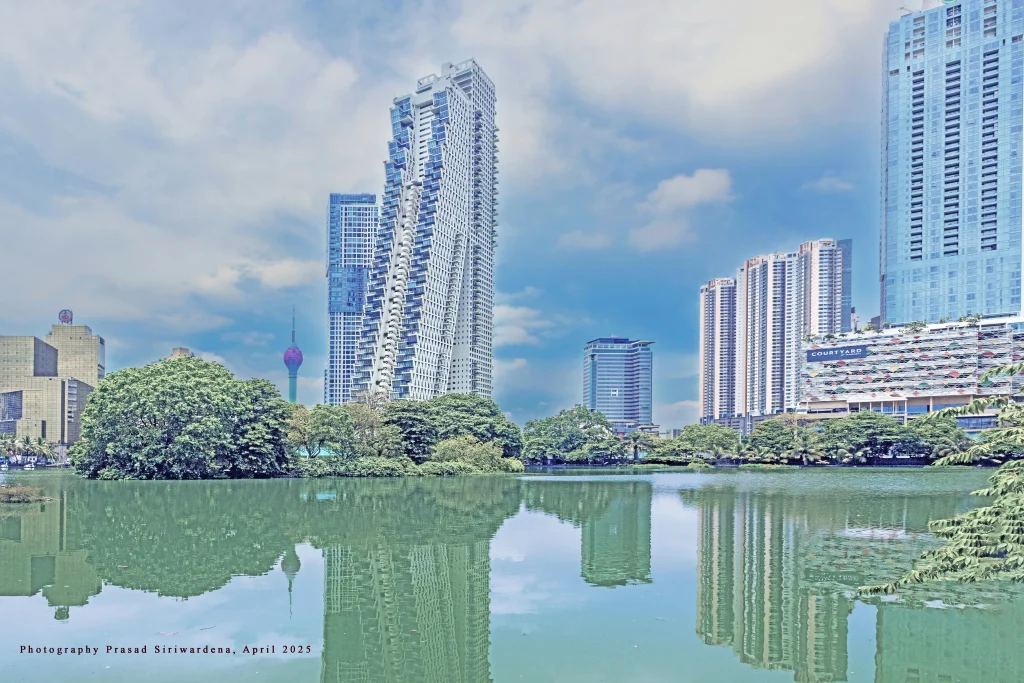
As the photograph accompanying this article beautifully illustrates, Beira Lake exists at the intersection of Sri Lanka’s past and future. The reflections of modern skyscrapers on waters that once carried colonial trading vessels create a powerful visual metaphor for our current moment of choice.
We can continue to treat this historic waterway as merely a backdrop for urban development, allowing its slow degradation to continue. Or we can recognise it as a living legacy, a vital ecological system, a repository of cultural heritage, and potentially, a sustainable urban water management model in tropical cities worldwide.
At Greenworld Trust, we are committed to the latter vision. Through research, advocacy, and community engagement, we can help transform Beira Lake from a forgotten jewel into a shining example of urban environmental stewardship.
Join us in this journey to reclaim Colombo’s historic heart.
Prasad Siriwardena is an environmental photographer and conservation advocate with Greenworld Trust. Greenworld Trust is a non-profit organisation dedicated to the protection and restoration of Sri Lanka’s natural environment through research, advocacy, and community action. Learn more at https://greenworldtrustlk.org
References
- Central Environmental Authority (CEA). (2022). Annual Water Quality Assessment Report.
- Department of Wildlife Conservation (DWC). (2023). Urban Biodiversity Status Report – Colombo.
- Marine Environment Protection Authority. (2024). Urban Waterway Cleanup Statistics 2023-2024.
- Meteorological Department of Sri Lanka. (2023). Urban Flooding Risk Assessment – Colombo District.
- Perera, A. (2014). Colombo’s Colonial Heritage. Colombo: Sarasavi Publishers.
- Survey Department of Sri Lanka. (Historical Maps Collection, 1800-2000).
- Urban Development Authority (UDA). (2020). Beira Lake Development Plan.
- Urban Land Institute. (2023). Economic Benefits of Urban Waterway Restoration: Global Case Studies.
Further Reading
- Fernando, S. (2019). The Dutch Canals of Ceylon. National Trust Sri Lanka Publications.
- Gunawardena, M. (2021). Urban Wetlands of Colombo: Ecological Assessment and Conservation Strategies. Journal of Urban Ecology, 15(2), 78-96.
- Ratnayake, R. (2022). Traditional Water Management Systems in Sri Lanka. University of Colombo Press.